
Looking Beyond the Record: When Breed Health Information Lives Outside the Database


The Record a Breeder Can See is not Always the Whole Record
In February 2018, the Small Munsterlander Club of North America sent its breeders a four-page progeny report covering approved litters from 1977 through 2017. It listed sires and dams, puppies and litters produced, approved breedings, countries of origin, test scores, and the percentage of offspring tested.
Some dogs' names appeared in red. Others appeared in blue. Most were black.
The report itself contained no legend. The explanation appeared in the body of the email that accompanied it:
"Dogs in blue have a low chance of being a carrier of epilepsy from the German DogBase program. Dogs in red have thrown one or more puppies with seizures or epilepsy."
That provides a legend in the narrowest sense, but not enough information for a breeder to evaluate what either designation actually meant. How did DogBase calculate a "low chance," and how low was it? What evidence supported each red designation. How were reports verified? What did black mean? More importantly, where did that information go?
The entire breeder base received the email. I received it. I later attended a conference call at which epilepsy tracking appeared on the agenda. More than eight years later, I cannot reconstruct what was discussed or decided. I do not recall receiving the promised minutes, and I have not located them in my records. They may have been distributed, but I cannot responsibly make that claim in either direction without the document.
I am not pointing a finger at the person who sent the email. I am part of the example. I received the information, attended the meeting, and lost track of it too.
That is the point. Human memory is not a database. An inbox is not institutional memory.
A Seizure is not a Diagnosis of Epilepsy
The wording "seizures or epilepsy" creates another problem because those terms are not interchangeable.
A seizure is an event with many possible causes. Veterinary consensus defines epilepsy as a disease of the brain involving an enduring predisposition to epileptic seizures, usually applied clinically as at least two unprovoked epileptic seizures more than 24 hours apart. Idiopathic epilepsy is one category of epilepsy. It may be classified as genetic, suspected genetic, or of unknown cause.
There is no single routine test that simply returns a positive diagnosis of idiopathic epilepsy. Diagnosis depends on the dog's history and seizure pattern, clinical and neurological findings, exclusion of metabolic or toxic causes, and, in some cases, diagnostic imaging and cerebrospinal-fluid testing.
A toxin or metabolic disturbance can produce a reactive seizure that resolves when the disturbance is corrected. Trauma can cause an acute seizure, while lasting intracranial injury may be associated with structural epilepsy. Neither situation carries the same meaning for a breeder as recurrent, unprovoked seizures consistent with idiopathic or suspected genetic epilepsy.
Yet the red category included dogs that had produced one or more puppies with "seizures or epilepsy." Did that mean one isolated seizure reported by an owner? A veterinarian-supported diagnosis? Multiple related dogs with recurrent, unprovoked seizures? Were toxic, metabolic, and structural causes investigated? What was the age of onset? Were designations corrected when new information emerged?
Without those details, the color communicated concern without giving breeders enough evidence to weigh it responsibly.
The Work was Happening, but the System was not Complete
The February report was not the last reference to the subject. A May 2018 conference-call invitation listed this agenda item:
Epilepsy numbers updated, how are we at tracking affected dogs.
The invitation said minutes would be sent to breeders and stud-dog owners who could not attend. The surviving invitation proves that epilepsy tracking was an active organizational concern. It does not tell us what numbers were presented, how an affected dog was defined, what was decided, or what changed afterward.
This article is not a condemnation of the club or the people who performed that work. For more than 25 years, individuals have given an extraordinary amount of time and effort to support this breed. The progeny report, the attempt to draw information from DogBase, and the later discussion of affected-dog tracking are evidence of that commitment.
But good work is not enough if the knowledge it produces cannot be found when a breeder needs it. The information has to be converted into a durable, detailed, breeder-facing record.
The Pedigree Database Should Be Our Institutional Memory
Leadership positions eventually change hands. Breeders and stud-dog owners enter and leave the program. Memories fade. Emails disappear into old accounts. Meeting minutes become difficult to find. The population continues through all of it.
The pedigree database should be the breed's institutional memory. It already preserves identity, ancestry, and breeding history across generations. Supported health information belongs there too, attached to the relevant dog's record with enough detail to distinguish a report from a diagnosis, a seizure from epilepsy, and a suspected familial pattern from an established mode of inheritance.
A useful record would identify the reported condition, the dog or relative involved, the source and date, the level of veterinary support, relevant diagnostic findings, and any later correction or change. It would allow breeders to see the information in context without treating every report as proof of inheritance or automatically removing every related dog from the gene pool.
Transparency is not genetic purging. It does not mean a breeder can never use a dog with risk behind it. It means the breeder can make that decision knowingly.
One Person Cannot Do This Work
The breed warden should oversee the health-record process, but cannot be expected to perform all of it alone. That was too much work in 2018, and it remains too much today. Even if annual puppy production has not increased dramatically, years of accumulated records, breeder turnover, expanding pedigrees, new health reports, and the need to educate members continue to increase the workload.
A health-record team should work under the breed warden's supervision. Team members could receive reports, obtain missing documentation, follow up with owners and veterinarians, maintain pedigree connections, prepare database entries, and help breeders understand what the information does and does not show. The breed warden would establish standards, ensure the work is completed consistently, review sensitive classifications, and approve supported information before it enters the permanent record.
That is not bureaucracy for its own sake. It is quality control. More than one set of eyes can reduce errors, preserve context, and prevent the process from stopping when one volunteer leaves office or becomes unavailable.
The database also has to be usable. Information technically stored but poorly defined or difficult to interpret will not guide many breeding decisions. Some breeders will learn to use complex data on their own. Others will need education, examples, and people willing to walk them through it. Building the record and teaching breeders how to read it are parts of the same responsibility.
Leadership Should Make Stewardship Possible
This matters during our current 2026 election because two of the organization's most consequential roles are before the membership: president and breed warden. This is not an endorsement of or argument against any candidate. The need will remain regardless of who wins.
The president must be able to articulate a vision for a growing breed and recruit the people needed to fulfill it. That includes the elected officers, Breed Council, committees, and volunteers who can take on clearly defined pieces of work. Effective leadership recognizes where people are strong, gives them meaningful responsibility, supports them as they learn, and holds the larger effort together. It empowers with clearly defined output expectations.
Leadership should not be about controlling volunteers, breeders, or the breed. It should create the conditions in which all three can improve.
That need will become more urgent as the Small Munsterlander gains greater AKC visibility and public recognition. Popularity can bring opportunity, but it can also increase demand, attract people with different priorities, and weaken a breed when stewardship does not grow with it. If breeders lose meaningful control of pedigrees and breeding standards, good intentions alone will not protect the qualities that made the breed desirable.
Most members do not believe they have time to assume another open-ended obligation. Many truly do not. But technology makes it possible to divide large responsibilities into smaller, clearly defined contributions. Not every volunteer has to lead a committee or promise years of service. One person may organize documents. Another may verify records, follow up on a report, teach breeders to use a database, or contribute several hours to a defined project.
Leadership must make those opportunities visible, manageable, and worthwhile. And then, move out of the way to allow it to happen.
From Snapshots to the Movie
I have disagreed with people within my breed organization. Others have undoubtedly disagreed with me. That is normal in any organization.
What should not change with those relationships is the health information available to us when we make a breeding decision. Breed health information should be front and center, not dependent upon whom a breeder knows, whom they call, which old email they retained, or the relationship they have with the person holding the records.
A health report is a snapshot. A pedigree is another snapshot. A test score, a diagnosis, a litter, and an affected relative are snapshots too. Stewardship begins when we preserve those individual moments, connect them across generations, and learn to see the movie they create.
The breeders who learn to do that will move the breed forward. They will not treat one result or one dog as the whole story. They will use documented information to recognize patterns, manage risk, preserve diversity, and make better-informed decisions.
Better information cannot guarantee that heritable disease will decline. But without it, we are too often breeding dogs and hoping. A durable record gives us a chance to replace some of that hope with evidence, judgment, and accountability. Whether that work reduces disease will be revealed in the movie we leave behind.
A Call to Stewardship

This breed has been held up for decades by people who gave their time, knowledge, and energy because they believed it was worth protecting. Their contribution deserves to be recognized. But the Small Munsterlander is growing, its visibility is increasing, and the work ahead cannot continue to rest on the same few people.
We need more stewards. We need leaders who can invite people into the work, recognize where their strengths lie, trust them with meaningful responsibility, and support them as they learn. We need volunteers willing to preserve records, educate breeders, serve on committees, and carry forward the institutional knowledge others worked so hard to build.
Anyone who has hunted behind a good Small Munsterlander understands what is worth preserving. These dogs ask us for more than admiration. They ask us to work together to hold up the breed, celebrate what it is, and steward it responsibly today and into the future.
References
SMCNA. SMCNA Progeny Report, Working Copy by Sire and Working Copy by Dam: SMCNA Approved Litters, 1977-2017. February 2018. Four-page document distributed to the SMCNA breeder base by email. Not reproduced because the annotations identify individual dogs without documenting the evidence behind each designation.
SMCNA breed warden. Email accompanying the February 2018 progeny report. The email states that blue dogs had “a low chance of being a carrier of epilepsy” according to the German DogBase program and that red dogs had produced one or more puppies with seizures or epilepsy. Private correspondence in the author's records.
SMCNA breed warden. Conference-call invitation and agenda for Breed Council members, breeders, and stud-dog owners. May 2018. The agenda included updated epilepsy numbers and the tracking of affected dogs and stated that minutes would be distributed to breeders and stud-dog owners. Private correspondence in the author's records.
Berendt M, Farquhar RG, Mandigers PJJ, et al. “International veterinary epilepsy task force consensus report on epilepsy definition, classification and terminology in companion animals.” BMC Veterinary Research. 2015;11:182. https://doi.org/10.1186/s12917-015-0461-2
AKC Canine Health Foundation. “Orthopedic Foundation for Animals (OFA).” Describes CHIC as a centralized source of breed-specific health information intended to guide breeding decisions. https://www.akcchf.org/collaborations/orthopedic-foundation-for-animals-ofa/
AKC Canine Health Foundation. “Breeder Resources from the AKC Canine Health Foundation.” Discusses the value of submitting health-clearance information and making pedigree and health information available to breeders, puppy buyers, and researchers. https://www.akcchf.org/educational-resources/library/articles/breeder-resources-from-the/
Donner J, Freyer J, Davison S, et al. “Genetic prevalence and clinical relevance of canine Mendelian disease variants in over one million dogs.” PLOS Genetics. 2023;19(2). https://doi.org/10.1371/journal.pgen.1010651
Donner J, Anderson H, Davison S, et al. “Frequency and distribution of 152 genetic disease variants in over 100,000 mixed breed and purebred dogs.” PLOS Genetics. 2018;14(4). https://doi.org/10.1371/journal.pgen.1007361
Federation Cynologique Internationale Scientific Commission. “Breeding systems and dog health and welfare” and “Use of genomic tools.” Scientific position documents approved in 2024 and published through the FCI. https://www.fci.be/en/Breeding-systems-and-dog-health-and-welfare-Use-of-genomic-tools-6883.html
About the Author
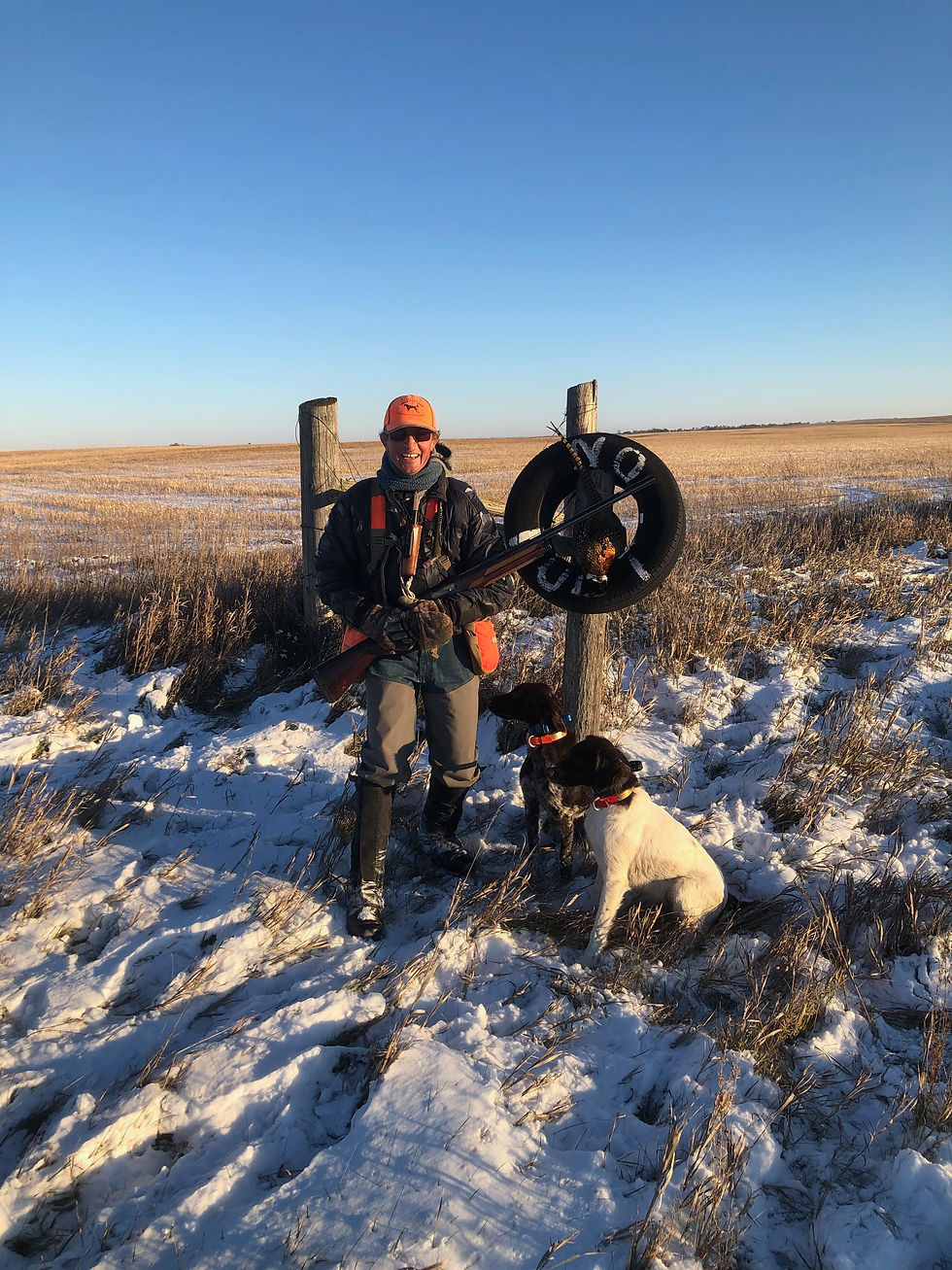
Jeffery Mizenko is the owner and breeder behind Cedars Point Kennel. A hunter, trainer, and longtime advocate for the Small Munsterlander, he writes about breeding from the place where pedigrees, health information, performance, and lived experience meet. His Looking Beyond series challenges breeders to see individual records as snapshots within a much larger generational story. He believes stewardship means asking difficult questions, preserving what the breed has taught us, and working together to leave the Small Munsterlander stronger than we found it.


Comments